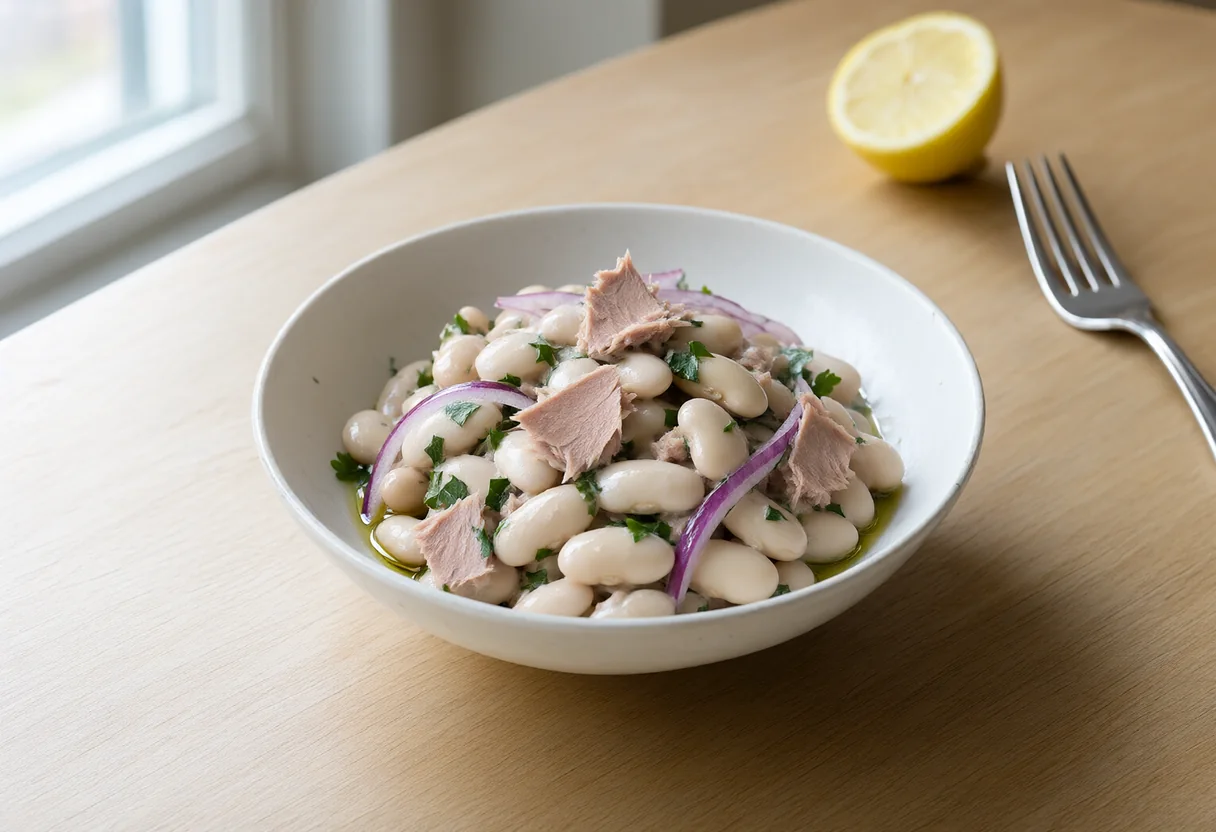
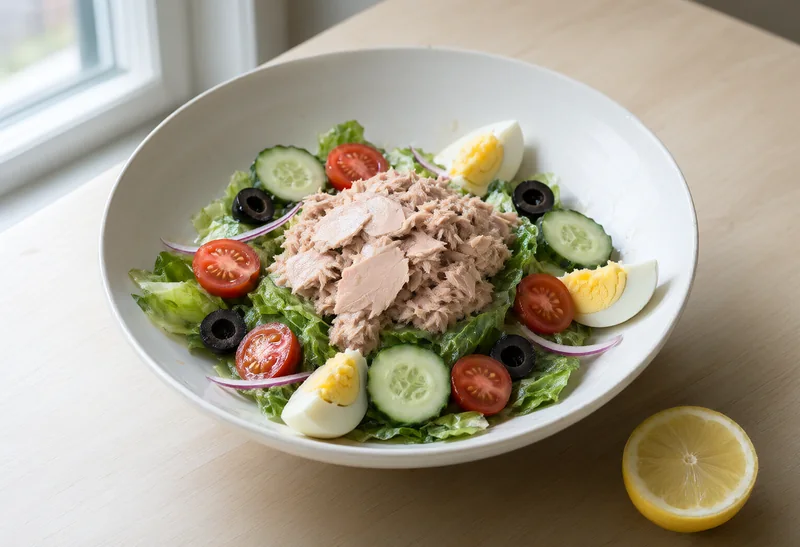
Ingredients
Serves 4. Prep 10 min, cook 0 min.
Salad
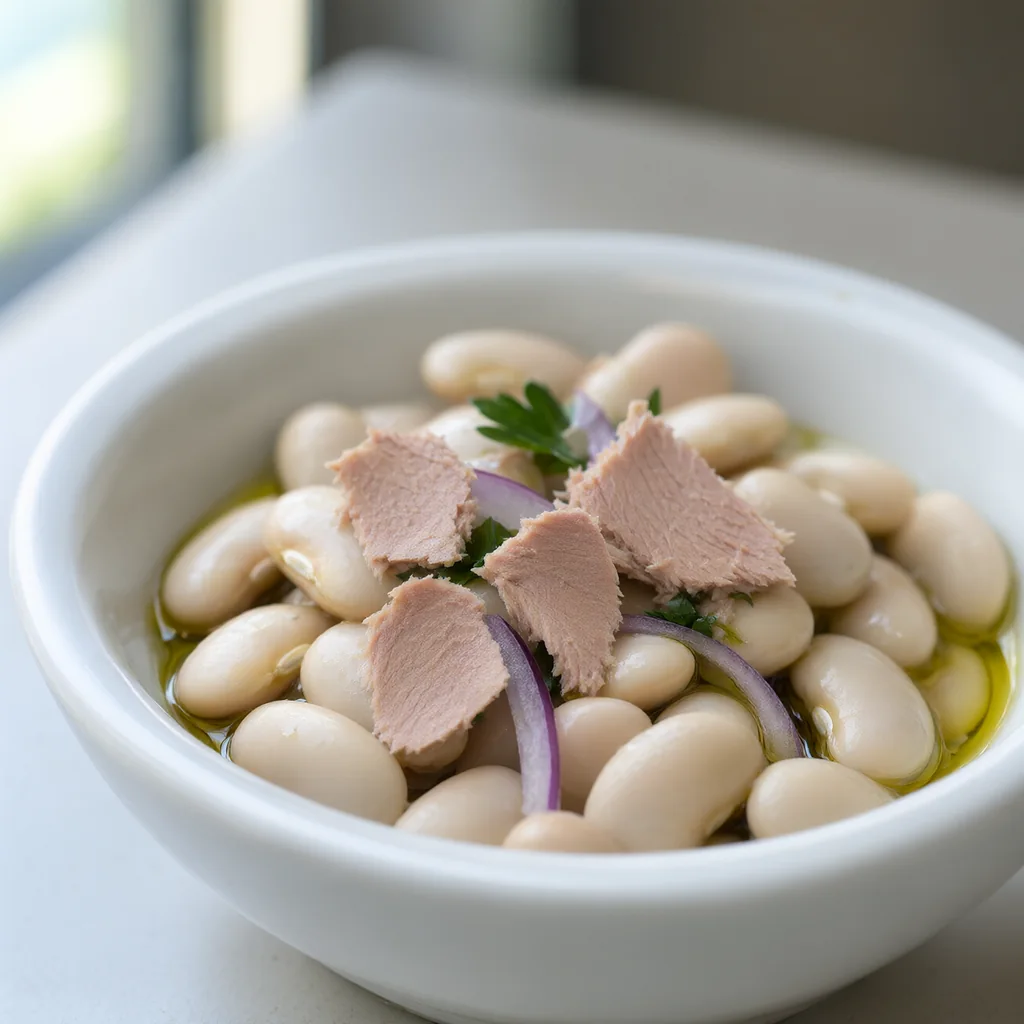
- 1 can (425 g), rinsed and drained (about 250 g) cannellini beans, canned, rinsed and drained
- 1 can (142 g), drained (about 113 g) tuna in olive oil, drained
- 1/4 medium (40 g), sliced very thin red onion
- 8 g (a small handful), chopped flat-leaf parsley
Dressing
- 33 ml (30 g) extra-virgin olive oil
- 1 tbsp (15 g) lemon juice
- 1 pinch (1 g) salt
- 1/2 tsp (1 g) black pepper, ground
Method
- Soak the sliced onion in a bowl of cold water for 10 minutes to take the sharp edge off. Drain and pat dry.
- Tip the beans into a sieve, rinse under cold water and drain well for 5 minutes. Wet beans dilute the dressing.
- Whisk the olive oil, lemon juice, salt and pepper in a medium bowl.
- Add the beans, onion and parsley. Fold gently with a spoon so the beans stay whole.
- Drain the tuna and break it into chunks of 2 to 3 cm with a fork. Fold it in last, in 3 or 4 strokes.
- Leave for 15 minutes at room temperature so the beans take up the dressing. Taste, and add a little salt or lemon juice if needed.
Nutrition facts
One portion is 115 g (a 4-serving recipe, 460 g cooked). By portion, per 100 g or for any weight: calories in Legume Salad with Tuna.
| Nutrient | Per portion | Per 100 g | % DV |
|---|
| Energy and macronutrients |
|---|
| Energy | 200 kcal | 174 kcal | 10% |
|---|
| Protein | 13 g | 11.3 g | 26% |
|---|
| Carbohydrate | 14.7 g | 12.8 g | 5% |
|---|
| of which sugars | 0.72 g | 0.62 g | |
|---|
| Fiber | 3.3 g | 2.9 g | 12% |
|---|
| Fat | 10 g | 8.7 g | 13% |
|---|
| of which saturated | 1.5 g | 1.3 g | 8% |
|---|
| of which monounsaturated | 6.3 g | 5.5 g | |
|---|
| of which polyunsaturated | 1.7 g | 1.5 g | |
|---|
| Cholesterol | 5.1 mg | 4.4 mg | 2% |
|---|
| Minerals |
|---|
| Sodium | 429 mg | 373 mg | 19% |
|---|
| Potassium | 375 mg | 326 mg | 8% |
|---|
| Calcium | 55.8 mg | 48.5 mg | 4% |
|---|
| Iron | 2.5 mg | 2.1 mg | 14% |
|---|
| Magnesium | 43.3 mg | 37.6 mg | 10% |
|---|
| Phosphorus | 149 mg | 130 mg | 12% |
|---|
| Zinc | 1 mg | 0.87 mg | 9% |
|---|
| Copper | 0.18 mg | 0.15 mg | 20% |
|---|
| Manganese | 0.38 mg | 0.33 mg | 16% |
|---|
| Selenium | 22.5 µg | 19.6 µg | 41% |
|---|
| Vitamins |
|---|
| Vitamin A (RAE) | 15 µg | 13 µg | 2% |
|---|
| Vitamin C | 4.8 mg | 4.2 mg | 5% |
|---|
| Vitamin D | 1.9 µg | 1.6 µg | 9% |
|---|
| Vitamin E | 1.8 mg | 1.6 mg | 12% |
|---|
| Vitamin K | 52 µg | 45.2 µg | 43% |
|---|
| Thiamin (B1) | 0.08 mg | 0.07 mg | 7% |
|---|
| Riboflavin (B2) | 0.06 mg | 0.05 mg | 5% |
|---|
| Niacin (B3) | 3.6 mg | 3.1 mg | 23% |
|---|
| Pantothenic acid (B5) | 0.25 mg | 0.22 mg | 5% |
|---|
| Vitamin B6 | 0.09 mg | 0.08 mg | 6% |
|---|
| Folate (DFE) | 47.8 µg | 41.5 µg | 12% |
|---|
| Vitamin B12 | 0.62 µg | 0.54 µg | 26% |
|---|
| Choline | ≥ 9.4 mg | ≥ 8.2 mg | 2% |
|---|
Calculated from the weights in the ingredient list with USDA FoodData Central (SR Legacy) values; only what is eaten counts (drained oil, rinds and similar are left out). Vitamin losses in cooking are not modelled, and “≥” marks a value that is a lower bound because the table has no figure for some ingredients. % DV uses the FDA reference values for adults. Real dishes vary with ingredients and portion size.