Ingredients
Serves 4. Prep 30 min, cook 40 min.
Fish cutlets (8)
- 500 g, cut into 3 cm chunks pollock fillet (or cod or hake), skinless, boneless
- 1 medium (about 100 g), quartered onion
- 2 slices (60 g), torn white sandwich bread, crusts removed
- 80 ml (80 g) whole milk, for soaking the bread
- 1 large (50 g) egg
- 1 tsp (6 g) salt
- 1/2 tsp (1 g) black pepper, ground
- 30 g (about 1/3 cup) dry breadcrumbs, for coating
- 3 tbsp (40 g) sunflower or vegetable oil, for frying
Mashed potatoes
- 1 kg, cut into 4 cm chunks potatoes, starchy (Russet or Yukon Gold), peeled
- 200 ml (200 g) whole milk, warmed
- 2 tbsp (30 g) unsalted butter
- 1 1/2 tsp (8 g) salt
To serve
- 1 tbsp (5 g), chopped fresh dill
Method
- Put the potatoes in a 4 liter pot, cover with cold water by 2 cm and add 1 teaspoon of the mash salt. Bring to a boil, then simmer for 18 to 20 minutes, until a knife slides into a chunk with no resistance.
- While the potatoes cook, soak the torn bread in the 80 ml of milk for 10 minutes. Squeeze it out lightly, leaving the bread moist, and discard the extra milk.
- Pulse the fish chunks and onion in a food processor 15 to 20 times, until finely chopped but not a paste. Scrape into a bowl.
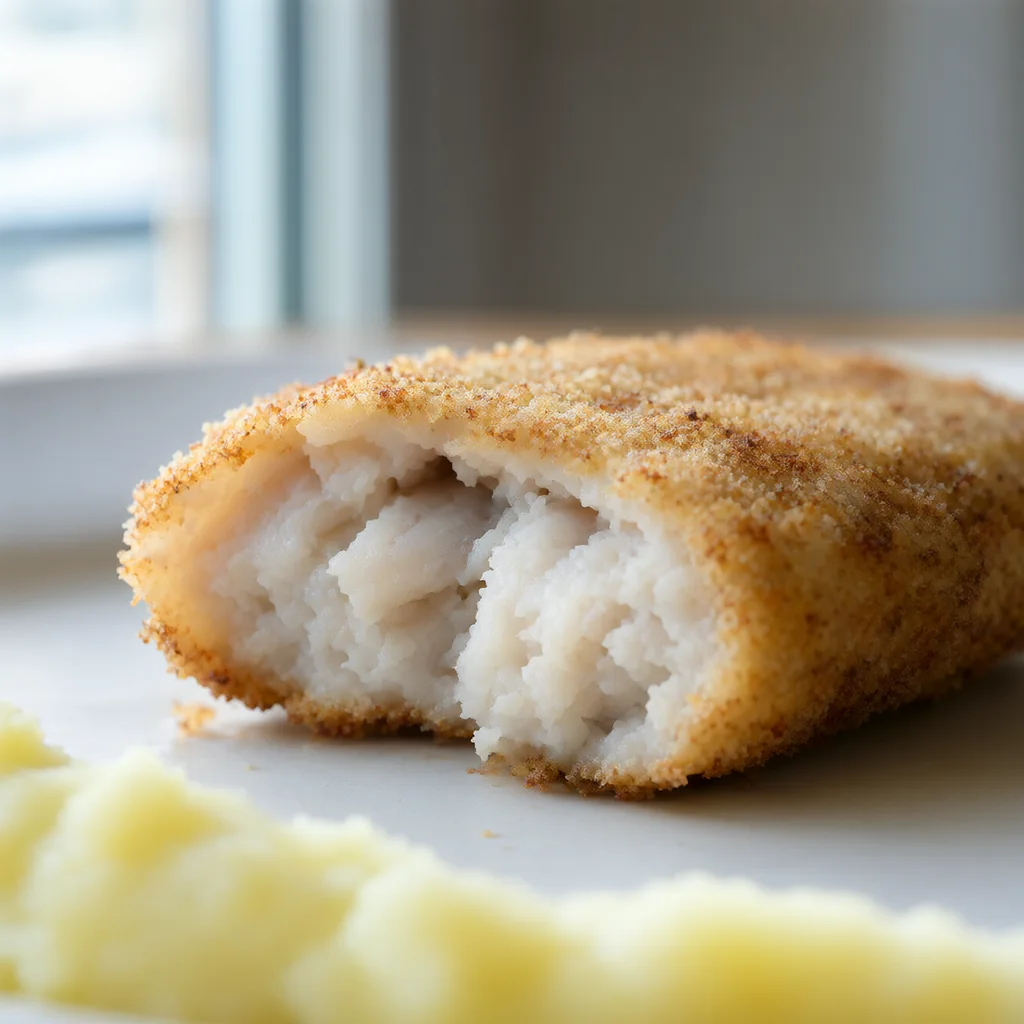
- Add the soaked bread, egg, 6 g salt and pepper. Mix with your hand for 1 minute, until the mixture holds together. It will be soft and a little sticky. Chill for 15 minutes.
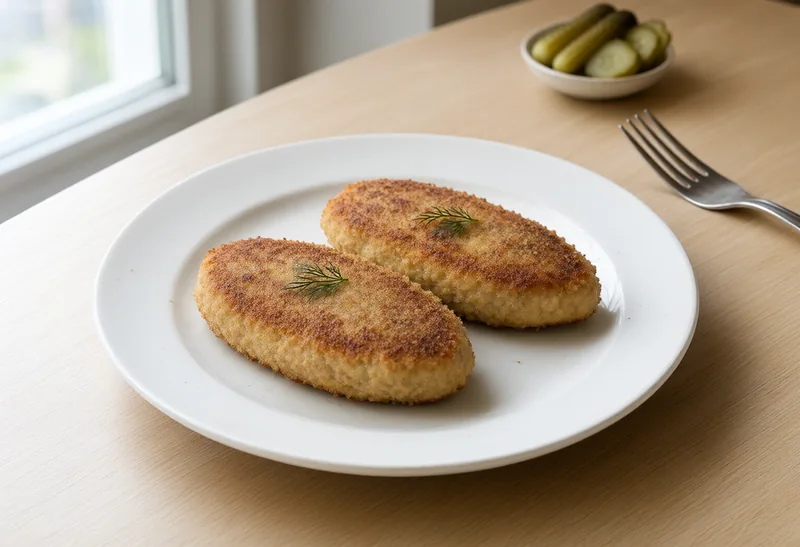
- Spread the breadcrumbs on a plate. With wet hands, shape the mixture into 8 oval cutlets, each about 10 cm long, 6 cm wide and 2 cm thick (about 97 g). Press both sides into the crumbs.
- Heat half the oil in a 28 cm skillet over medium heat for 1 minute. Fry 4 cutlets for 4 minutes per side, until golden brown. Turn the heat to low, cover, and cook 4 minutes more, until the center is opaque and reads 70°C (160°F). Repeat with the rest of the oil and cutlets.
- Warm the 200 ml of milk in a small pan until steaming. Drain the potatoes and return them to the hot pot for 1 minute to steam off the water. Add the butter and mash until no lumps remain. Pour in the warmed milk a little at a time, mashing, until smooth. Stir in the remaining salt.
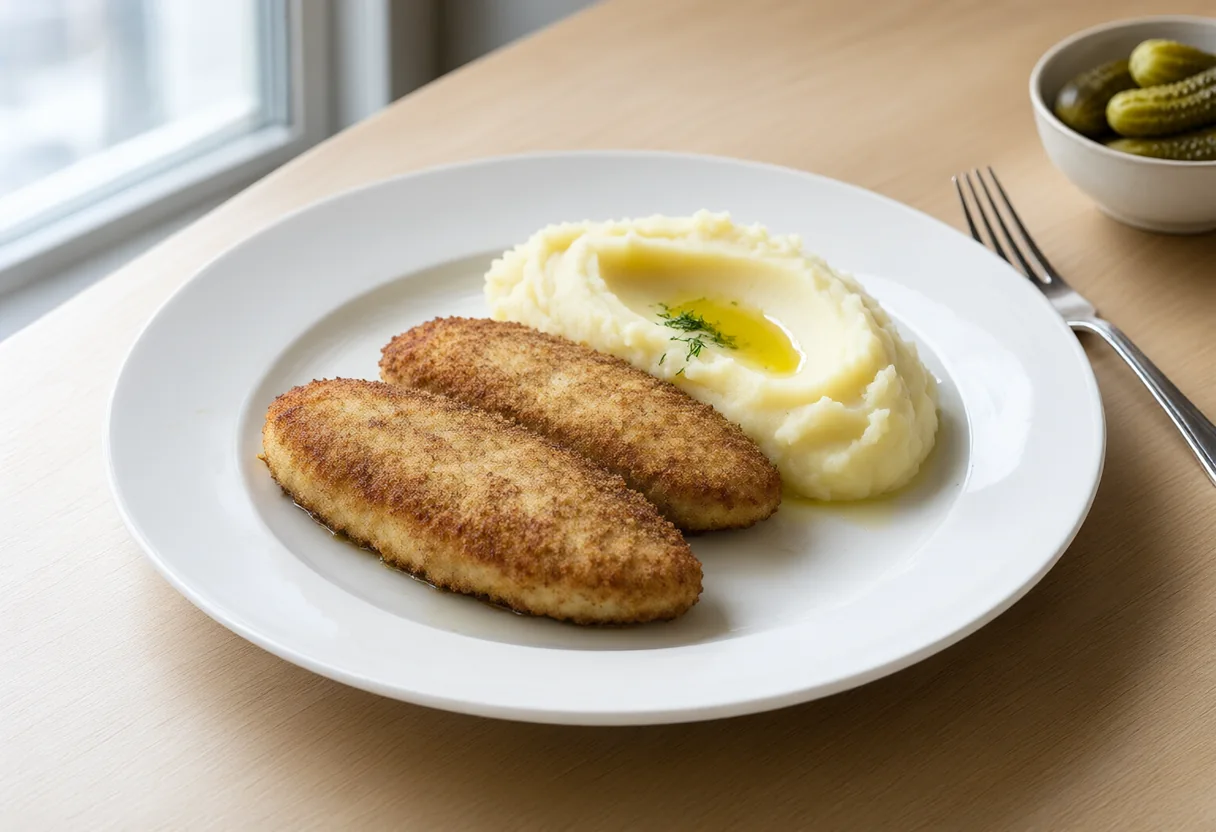
- Serve 2 cutlets and about a quarter of the mash on each plate. Top with chopped dill.
Nutrition facts
One portion is 488 g (a 4-serving recipe, 1952 g cooked). By portion, per 100 g or for any weight: calories in Fish Cutlet with Mashed Potatoes.
| Nutrient | Per portion | Per 100 g | % DV |
|---|
| Energy and macronutrients |
|---|
| Energy | 524 kcal | 107 kcal | 26% |
|---|
| Protein | 32.9 g | 6.8 g | 66% |
|---|
| Carbohydrate | 62.3 g | 12.8 g | 23% |
|---|
| of which sugars | ≥ 7.8 g | ≥ 1.6 g | |
|---|
| Fiber | ≥ 6.5 g | ≥ 1.3 g | 23% |
|---|
| Fat | 16.6 g | 3.4 g | 21% |
|---|
| of which saturated | 6.4 g | 1.3 g | 32% |
|---|
| of which monounsaturated | 4 g | 0.82 g | |
|---|
| of which polyunsaturated | 4.7 g | 0.96 g | |
|---|
| Cholesterol | 145 mg | 29.8 mg | 48% |
|---|
| Minerals |
|---|
| Sodium | 1,750 mg | 358 mg | 76% |
|---|
| Potassium | 1,660 mg | 341 mg | 35% |
|---|
| Calcium | 173 mg | 35.4 mg | 13% |
|---|
| Iron | 3.7 mg | 0.75 mg | 20% |
|---|
| Magnesium | 118 mg | 24.3 mg | 28% |
|---|
| Phosphorus | 497 mg | 102 mg | 40% |
|---|
| Zinc | 1.9 mg | 0.4 mg | 18% |
|---|
| Copper | 0.4 mg | 0.08 mg | 45% |
|---|
| Manganese | 0.64 mg | 0.13 mg | 28% |
|---|
| Selenium | ≥ 12.6 µg | ≥ 2.6 µg | 23% |
|---|
| Vitamins |
|---|
| Vitamin A (RAE) | ≥ 106 µg | ≥ 21.7 µg | 12% |
|---|
| Vitamin C | ≥ 52.2 mg | ≥ 10.7 mg | 58% |
|---|
| Vitamin D | ≥ 1.1 µg | ≥ 0.22 µg | 5% |
|---|
| Vitamin E | ≥ 2.5 mg | ≥ 0.51 mg | 17% |
|---|
| Vitamin K | ≥ 7.1 µg | ≥ 1.4 µg | 6% |
|---|
| Thiamin (B1) | ≥ 0.4 mg | ≥ 0.08 mg | 34% |
|---|
| Riboflavin (B2) | ≥ 0.33 mg | ≥ 0.07 mg | 25% |
|---|
| Niacin (B3) | ≥ 4 mg | ≥ 0.82 mg | 25% |
|---|
| Pantothenic acid (B5) | ≥ 1.3 mg | ≥ 0.28 mg | 27% |
|---|
| Vitamin B6 | ≥ 0.84 mg | ≥ 0.17 mg | 50% |
|---|
| Folate (DFE) | ≥ 91.5 µg | ≥ 18.7 µg | 23% |
|---|
| Vitamin B12 | ≥ 0.44 µg | ≥ 0.09 µg | 18% |
|---|
| Choline | ≥ 82.5 mg | ≥ 16.9 mg | 15% |
|---|
Calculated from the weights in the ingredient list with USDA FoodData Central (SR Legacy) values; only what is eaten counts (drained oil, rinds and similar are left out). Vitamin losses in cooking are not modelled, and “≥” marks a value that is a lower bound because the table has no figure for some ingredients. % DV uses the FDA reference values for adults. Real dishes vary with ingredients and portion size.