Ingredients
Serves 4. Prep 20 min, cook 105 min.
Wheat and chicken
- 90 g (about 1/2 cup) jareesh (crushed whole wheat)
- 120 g chicken thighs, boneless, skinless
- 700 ml (700 g) water
- 1 tsp (5 g) salt
- 1 tsp (2 g) cumin, ground
- 1/2 tsp (1 g) cardamom, ground
- 1/2 tsp (1 g) black pepper, ground
Finish
- 80 g (1/3 cup) plain whole-milk yogurt
Topping
- 1 medium (about 100 g), halved and sliced thin onion
- 4 tsp (20 g) ghee
Method
- Rinse the jareesh in cold water until the water runs mostly clear. Cover with cold water by 5 cm and soak for at least 2 hours, or overnight. Drain.
- Put the chicken, 700 g of water, the salt, cumin, cardamom and pepper in a heavy 24 cm pot (3 liter). Bring to a boil over medium-high heat, skim off the foam, then cover and simmer on low for 25 minutes, until the chicken is cooked through.
- Lift out the chicken and set it aside. Add the drained jareesh to the broth. Bring back to a boil, then cover with the lid slightly open and simmer on the lowest heat for 60 minutes, stirring every 10 minutes and scraping the bottom, until the grains are soft. If it gets too thick before the grains are tender, add 100 ml of hot water.
- While the wheat cooks, shred the chicken into fine strands with two forks.
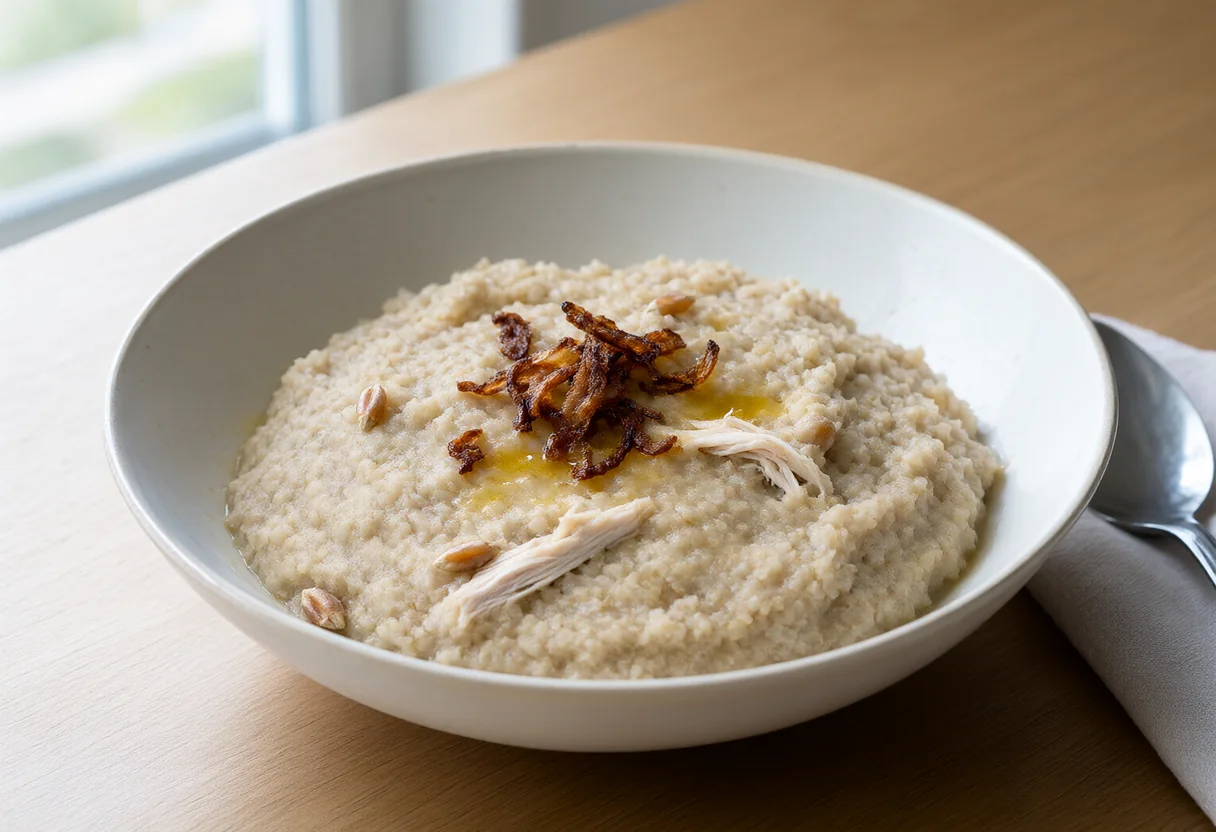
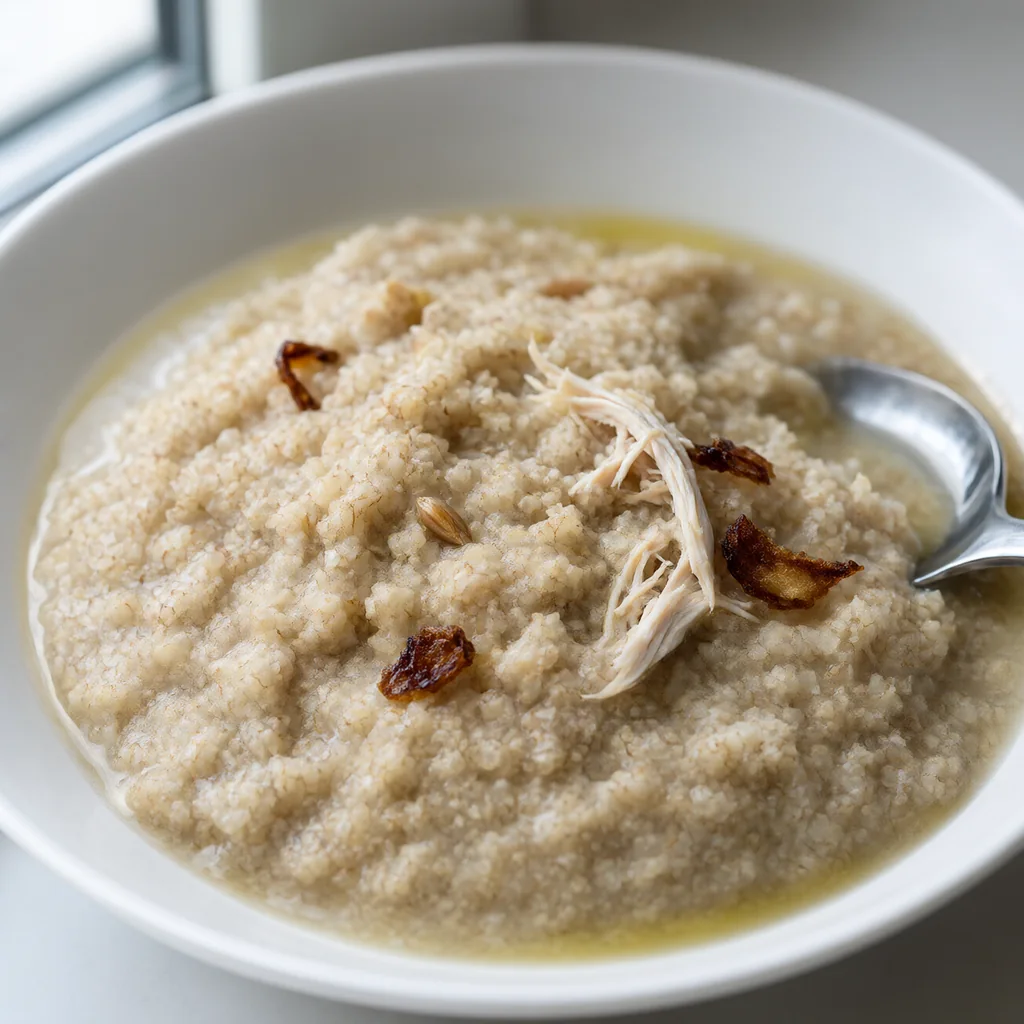
- Mash the wheat in the pot with a potato masher or the back of a spoon, 20 to 30 presses, until it forms a thick, creamy porridge with some whole grains still visible.
- Stir in the shredded chicken and yogurt. Simmer on low for 10 minutes, stirring often, until thick enough that a spoon leaves a trail. Taste and add salt if needed.
- Fry the onion: heat the ghee in a skillet over medium heat, add the sliced onion and cook for 15 minutes, stirring often, until deep golden brown and crisp at the edges.
- Divide the jareesh among 4 bowls, about 150 g each. Top with the fried onion and pour a little of the ghee from the pan over each bowl.
Nutrition facts
One portion is 150 g (a 4-serving recipe, 600 g cooked). By portion, per 100 g or for any weight: calories in Jareesh.
| Nutrient | Per portion | Per 100 g | % DV |
|---|
| Energy and macronutrients |
|---|
| Energy | 183 kcal | 122 kcal | 9% |
|---|
| Protein | 9.8 g | 6.5 g | 20% |
|---|
| Carbohydrate | 20.9 g | 13.9 g | 8% |
|---|
| of which sugars | 2.1 g | 1.4 g | |
|---|
| Fiber | 3.4 g | 2.3 g | 12% |
|---|
| Fat | 7.3 g | 4.9 g | 9% |
|---|
| of which saturated | 3.9 g | 2.6 g | 20% |
|---|
| of which monounsaturated | 2.2 g | 1.4 g | |
|---|
| of which polyunsaturated | 0.63 g | 0.42 g | |
|---|
| Cholesterol | 43.6 mg | 29.1 mg | 15% |
|---|
| Minerals |
|---|
| Sodium | 535 mg | 357 mg | 23% |
|---|
| Potassium | 248 mg | 165 mg | 5% |
|---|
| Calcium | 52.4 mg | 34.9 mg | 4% |
|---|
| Iron | 1.2 mg | 0.84 mg | 7% |
|---|
| Magnesium | 53.3 mg | 35.5 mg | 13% |
|---|
| Phosphorus | 153 mg | 102 mg | 12% |
|---|
| Zinc | 1.1 mg | 0.76 mg | 10% |
|---|
| Copper | 0.13 mg | 0.09 mg | 15% |
|---|
| Manganese | 0.84 mg | 0.56 mg | 37% |
|---|
| Selenium | 8 µg | 5.3 µg | 15% |
|---|
| Vitamins |
|---|
| Vitamin A (RAE) | 49.9 µg | 33.3 µg | 6% |
|---|
| Vitamin C | 2 mg | 1.4 mg | 2% |
|---|
| Vitamin D | 0.02 µg | 0.01 µg | 0% |
|---|
| Vitamin E | 0.24 mg | 0.16 mg | 2% |
|---|
| Vitamin K | 2.3 µg | 1.5 µg | 2% |
|---|
| Thiamin (B1) | 0.1 mg | 0.07 mg | 8% |
|---|
| Riboflavin (B2) | 0.12 mg | 0.08 mg | 9% |
|---|
| Niacin (B3) | 2.9 mg | 1.9 mg | 18% |
|---|
| Pantothenic acid (B5) | 0.35 mg | 0.23 mg | 7% |
|---|
| Vitamin B6 | 0.25 mg | 0.17 mg | 15% |
|---|
| Folate (DFE) | 13.5 µg | 9 µg | 3% |
|---|
| Vitamin B12 | 0.26 µg | 0.17 µg | 11% |
|---|
| Choline | 28.2 mg | 18.8 mg | 5% |
|---|
Calculated from the weights in the ingredient list with USDA FoodData Central (SR Legacy) values; only what is eaten counts (drained oil, rinds and similar are left out). Vitamin losses in cooking are not modelled, and “≥” marks a value that is a lower bound because the table has no figure for some ingredients. % DV uses the FDA reference values for adults. Real dishes vary with ingredients and portion size.