Ingredients
Serves 4. Prep 20 min, cook 27 min.
Fish
- 4 fillets, 160 g each (640 g) mackerel fillets, skin on, pin bones removed
- 2 tsp (8 g) fine sea salt
- 1 tsp (4 g) vegetable oil, for the rack
To serve
- 270 g, a 12 cm piece daikon, peeled
- 2 tsp (12 g) soy sauce
- 1 small (about 80 g), cut in 4 wedges lemon (or sudachi)
Rice
- 270 g (1.5 rice cups) Japanese short-grain rice
- 320 g (320 ml) water
Method
- Rinse the rice in a bowl of cold water. Swirl, drain and repeat 4 or 5 times until the water is nearly clear. Drain well, put it in a 2 liter pot with the 320 g water and soak for 30 minutes.
- While the rice soaks, pat the fillets dry. Sprinkle the 8 g salt evenly over both sides, a little more on the thick end. Leave them on a plate in the fridge for 20 minutes.
- Pat the fillets dry with paper towels. This removes the water the salt drew out and about half the salt, so only about 4 g of salt stays on the fish. Wet skin will not crisp.
- Cook the rice. Cover the pot, bring to a boil over medium-high heat (about 5 minutes), then turn the heat to its lowest and cook for 12 minutes. Turn off the heat and leave covered for 10 minutes. Do not lift the lid at any point.
- Heat the broiler on high for 5 minutes. Put the rack 8 to 10 cm below the element, with a foil-lined pan underneath. Wipe the rack with a paper towel dipped in the 4 g oil. Most of the oil stays on the rack.
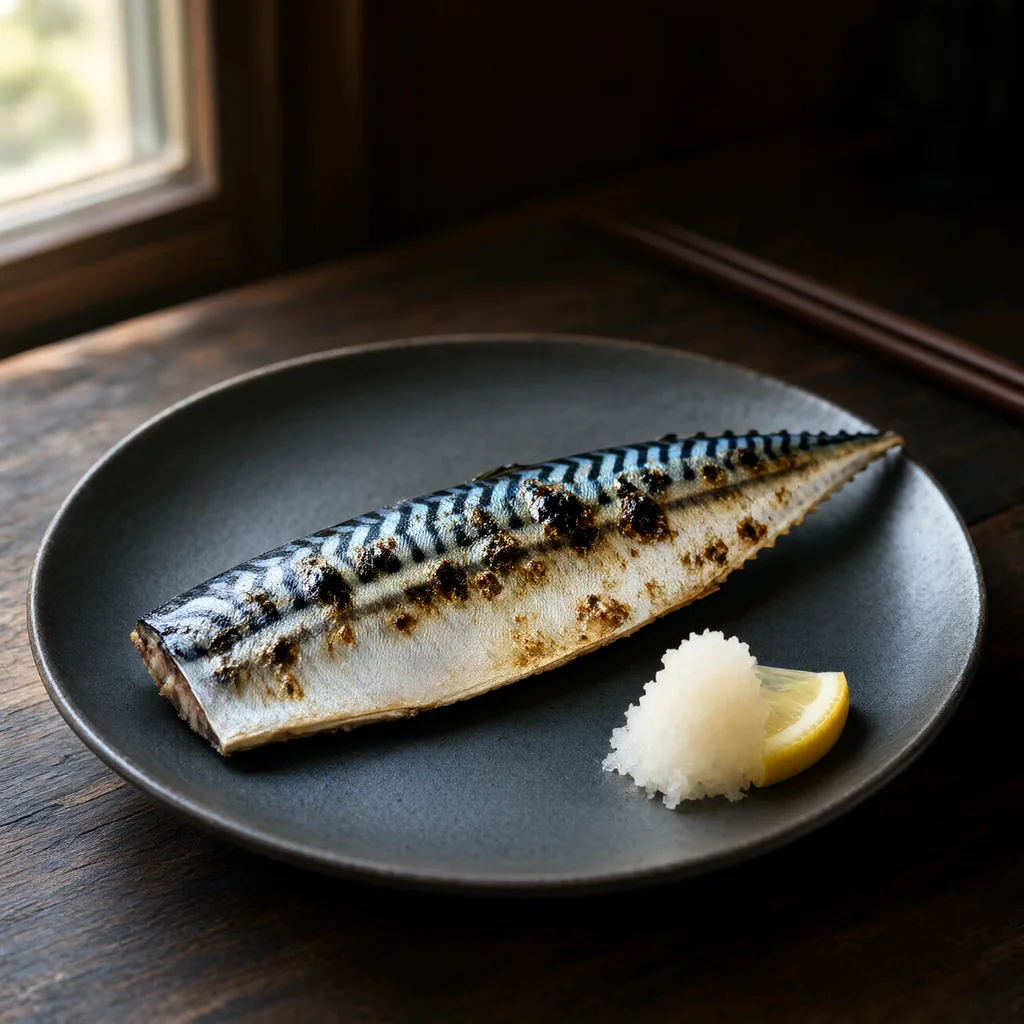
- Lay the fillets on the rack skin side down. Broil the flesh side for 4 minutes. Turn them skin side up and broil 5 to 6 minutes more, until the skin is blistered and browned in spots and the flesh is opaque and flakes at the thickest point. Fat and juice drip into the pan.
- While the fish cooks, grate the daikon on the fine side of a grater. Let it drain in a sieve for 2 minutes and press lightly. Throw away the juice (about 30 g with the end left on the grater). Divide the rest into 4 small mounds of about 60 g and add a few drops of soy sauce to each (12 g in total).
- Cut the lemon into 4 wedges. The rind and any juice left in the wedge are not eaten; about 25 g of juice gets squeezed.
- Fluff the rice with a wet rice paddle or spoon. Put about 140 g in a small bowl for each person.
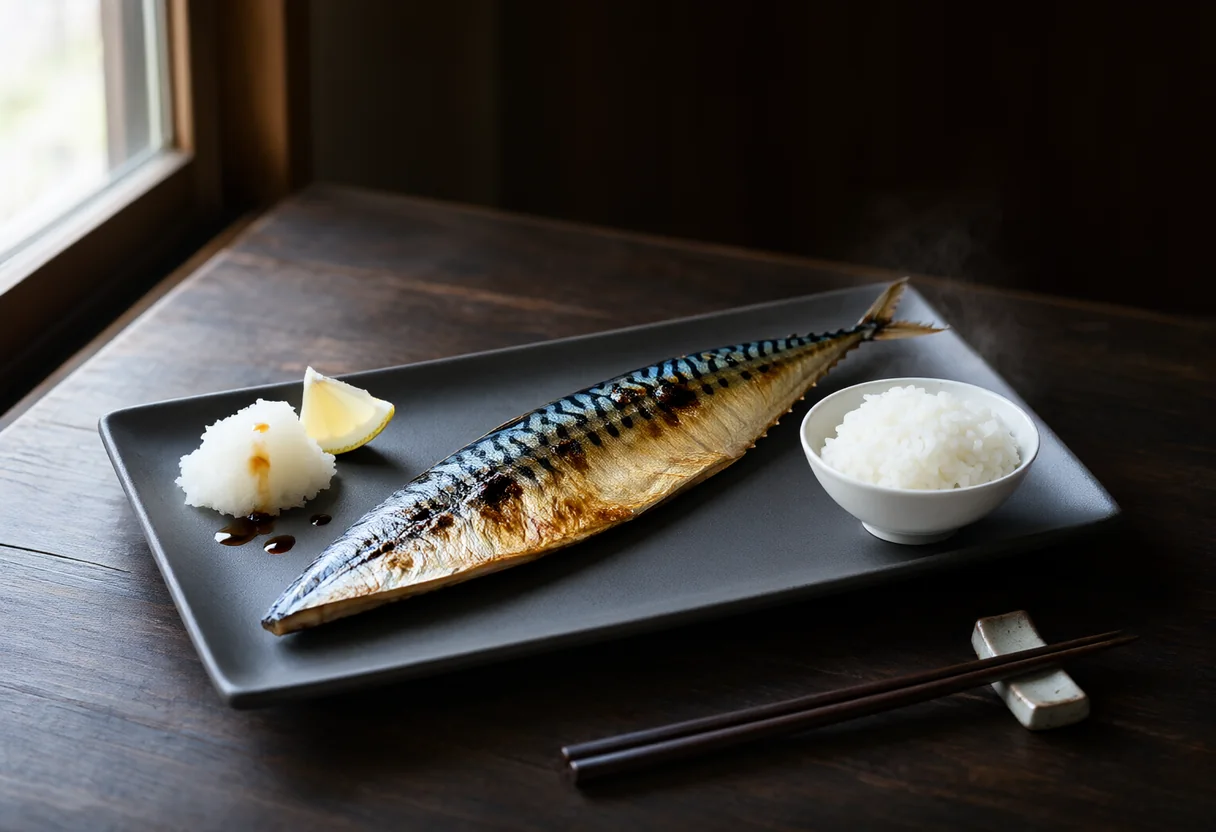
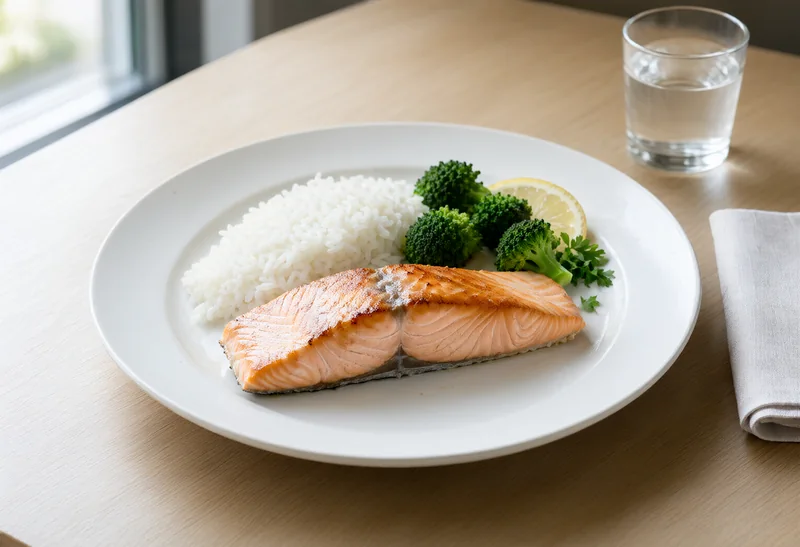
- Serve each plate with one fillet, skin side up, a mound of daikon beside it, a lemon wedge and the bowl of rice. Squeeze the lemon over the fish and eat it with the daikon.
Nutrition facts
One portion is 330 g (a 4-serving recipe, 1320 g cooked). By portion, per 100 g or for any weight: calories in Grilled Mackerel (Shioyaki Saba).
| Nutrient | Per portion | Per 100 g | % DV |
|---|
| Energy and macronutrients |
|---|
| Energy | 586 kcal | 178 kcal | 29% |
|---|
| Protein | 34.8 g | 10.6 g | 70% |
|---|
| Carbohydrate | 56.6 g | 17.2 g | 21% |
|---|
| of which sugars | 1.7 g | 0.51 g | |
|---|
| Fiber | 1.2 g | 0.35 g | 4% |
|---|
| Fat | 22.9 g | 7 g | 29% |
|---|
| of which saturated | 5.4 g | 1.6 g | 27% |
|---|
| of which monounsaturated | 8.9 g | 2.7 g | |
|---|
| of which polyunsaturated | 5.6 g | 1.7 g | |
|---|
| Cholesterol | 112 mg | 33.9 mg | 37% |
|---|
| Minerals |
|---|
| Sodium | 713 mg | 216 mg | 31% |
|---|
| Potassium | 712 mg | 216 mg | 15% |
|---|
| Calcium | 42.7 mg | 12.9 mg | 3% |
|---|
| Iron | 3.5 mg | 1.1 mg | 19% |
|---|
| Magnesium | 150 mg | 45.5 mg | 36% |
|---|
| Phosphorus | 431 mg | 131 mg | 34% |
|---|
| Zinc | 1.9 mg | 0.57 mg | 17% |
|---|
| Copper | 0.34 mg | 0.1 mg | 38% |
|---|
| Manganese | 0.78 mg | 0.24 mg | 34% |
|---|
| Selenium | 71 µg | 21.5 µg | 129% |
|---|
| Vitamins |
|---|
| Vitamin A (RAE) | 80.1 µg | 24.3 µg | 9% |
|---|
| Vitamin C | 17.2 mg | 5.2 mg | 19% |
|---|
| Vitamin D | 25.8 µg | 7.8 µg | 129% |
|---|
| Vitamin E | 2.5 mg | 0.75 mg | 16% |
|---|
| Vitamin K | 8.6 µg | 2.6 µg | 7% |
|---|
| Thiamin (B1) | 0.34 mg | 0.1 mg | 29% |
|---|
| Riboflavin (B2) | 0.55 mg | 0.17 mg | 42% |
|---|
| Niacin (B3) | 15.8 mg | 4.8 mg | 99% |
|---|
| Pantothenic acid (B5) | 2.3 mg | 0.71 mg | 47% |
|---|
| Vitamin B6 | 0.79 mg | 0.24 mg | 47% |
|---|
| Folate (DFE) | 23.6 µg | 7.1 µg | 6% |
|---|
| Vitamin B12 | 13.9 µg | 4.2 µg | 581% |
|---|
| Choline | 109 mg | 33.1 mg | 20% |
|---|
Calculated from the weights in the ingredient list with USDA FoodData Central (SR Legacy) values; only what is eaten counts (drained oil, rinds and similar are left out). Vitamin losses in cooking are not modelled, and “≥” marks a value that is a lower bound because the table has no figure for some ingredients. % DV uses the FDA reference values for adults. Real dishes vary with ingredients and portion size.