Ingredients
Serves 4. Prep 30 min, cook 20 min.
Milanesas
- 4 slices (160 g each), trimmed of fat beef top round, in 4 slices
- 2 large (about 100 g) eggs
- 2 cloves (about 6 g), minced garlic
- 2 tbsp (4 g), finely chopped fresh flat-leaf parsley
- 3/4 tsp (4 g) salt
- 1/2 tsp (1 g) black pepper, ground
- 130 g (about 1 cup) plain dry breadcrumbs
- 200 ml (184 g) sunflower or vegetable oil, for frying
Salad
- 150 g, torn romaine or butterhead lettuce
- 2 medium (about 250 g), each cut in 6 wedges ripe tomatoes
- 1/2 small (about 50 g), sliced thin red onion
- 1 tbsp (14 g) olive oil
- 2 tsp (10 g) white wine vinegar
- 1/3 tsp (2 g) salt
To serve
- 1 small (about 80 g) lemon, cut into 4 wedges
Method
- Trim any fat from the beef slices. Place one slice between two sheets of plastic wrap. Pound with a meat mallet or the bottom of a heavy pan, working from the center out, until it is an even 4 to 5 mm thick, about 20 by 15 cm. Repeat with the others.
- In a wide dish, beat the eggs with the garlic, parsley, salt and pepper. Put the breadcrumbs on a plate.
- Dip one slice in the egg, let the extra run off, then lay it in the breadcrumbs. Press the crumbs in with your palm, turn and press the other side. Set on a rack or board. Repeat with the rest and let them sit for 10 minutes so the coating sets.
- While they rest, heat the oven to 95 C (200 F) to keep batches warm. Tear the lettuce into a bowl and add the tomato wedges and onion. Keep the dressing separate for now.
- Heat the frying oil in a 28 cm skillet over medium-high heat for 2 to 3 minutes, until a pinch of crumbs sizzles right away and the oil shimmers.
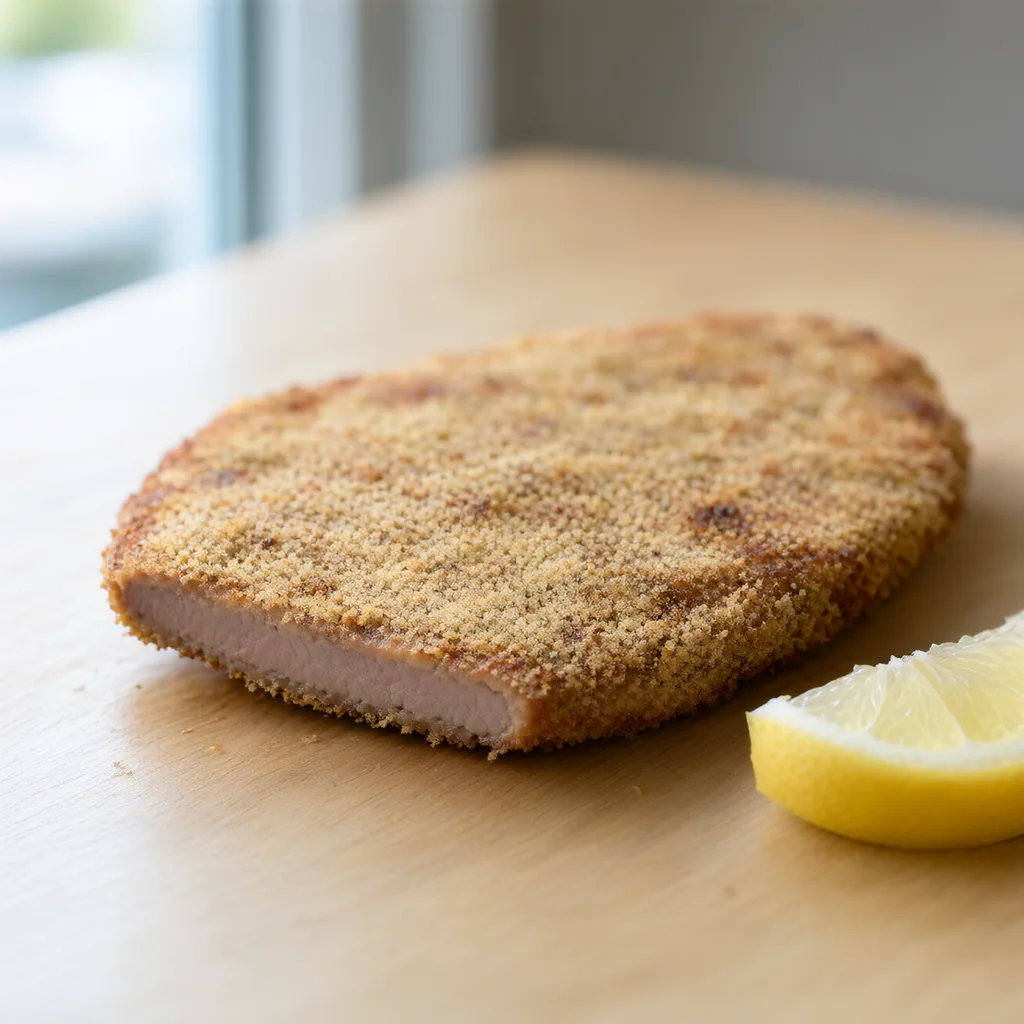
- Fry 1 milanesa at a time. Cook for 2 to 3 minutes on the first side, until deep golden, then turn and cook for 2 minutes more, until the meat is cooked through.
- Lift out with a spatula and drain on paper towels for 1 minute. Keep warm in the oven. If crumbs in the oil turn dark, pour the oil through a strainer into a clean skillet before the second batch.
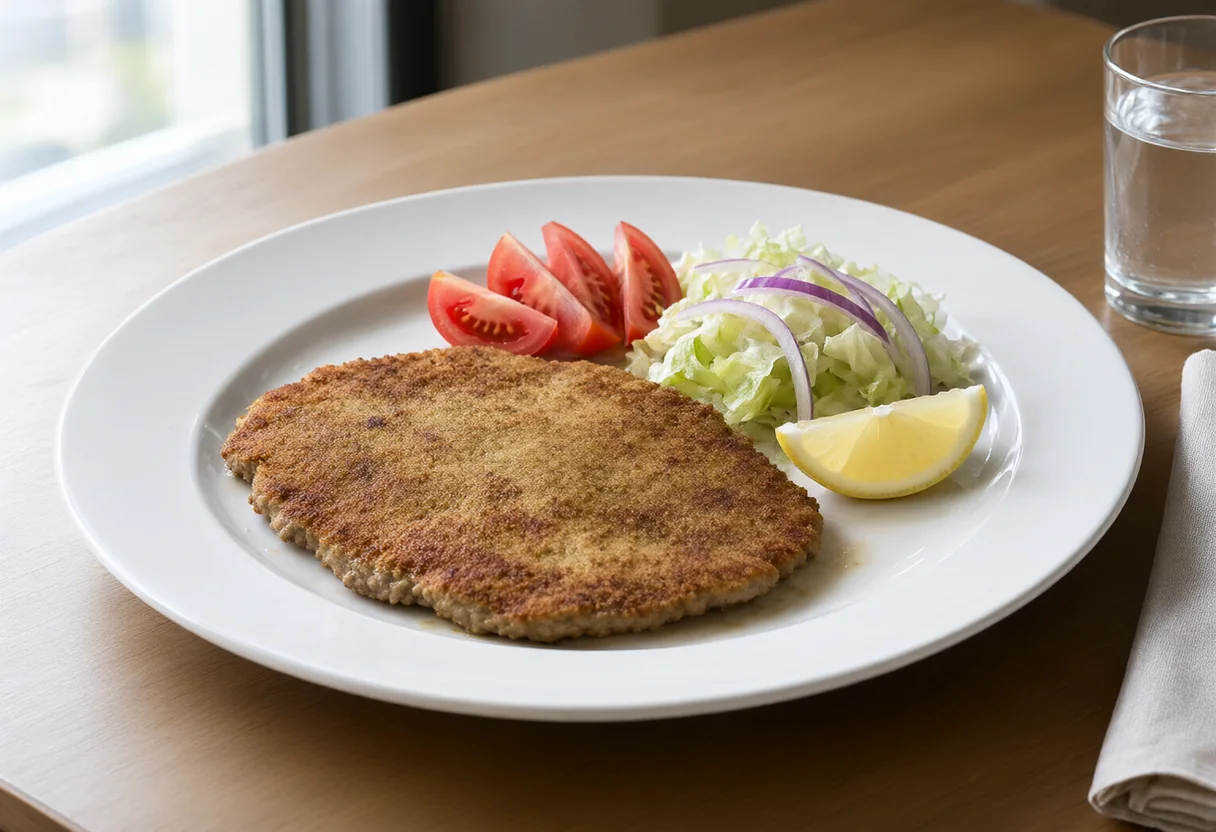
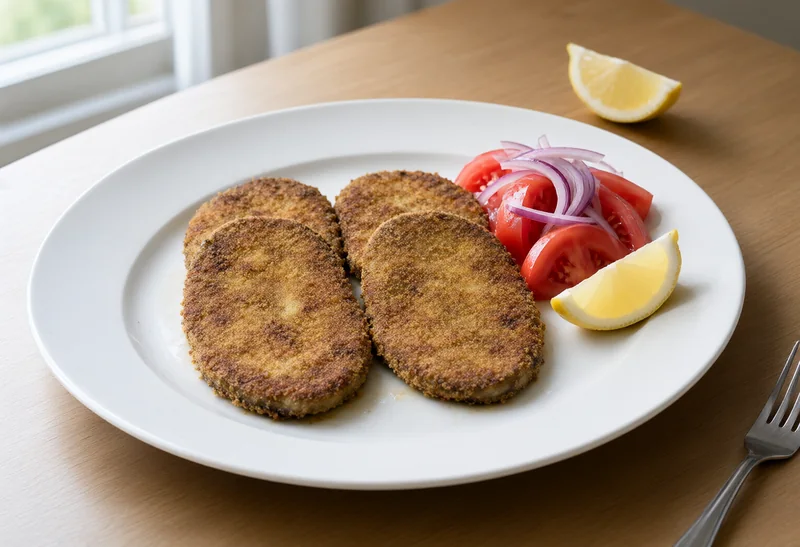
- Dress the salad with the olive oil, vinegar and salt, and toss. Serve the milanesas hot with the salad and a lemon wedge each.
Nutrition facts
One portion is 310 g (a 4-serving recipe, 1240 g cooked). By portion, per 100 g or for any weight: calories in Beef Milanesa with Salad.
| Nutrient | Per portion | Per 100 g | % DV |
|---|
| Energy and macronutrients |
|---|
| Energy | 456 kcal | 147 kcal | 23% |
|---|
| Protein | 44.6 g | 14.4 g | 89% |
|---|
| Carbohydrate | 21.7 g | 7 g | 8% |
|---|
| of which sugars | 4.2 g | 1.4 g | |
|---|
| Fiber | 3 g | 0.98 g | 11% |
|---|
| Fat | 21.7 g | 7 g | 28% |
|---|
| of which saturated | 4.4 g | 1.4 g | 22% |
|---|
| of which monounsaturated | 7.8 g | 2.5 g | |
|---|
| of which polyunsaturated | 8 g | 2.6 g | |
|---|
| Cholesterol | 177 mg | 57 mg | 59% |
|---|
| Minerals |
|---|
| Sodium | 865 mg | 279 mg | 38% |
|---|
| Potassium | 851 mg | 274 mg | 18% |
|---|
| Calcium | 101 mg | 32.5 mg | 8% |
|---|
| Iron | 5.9 mg | 1.9 mg | 33% |
|---|
| Magnesium | 46.3 mg | 14.9 mg | 11% |
|---|
| Phosphorus | 465 mg | 150 mg | 37% |
|---|
| Zinc | 6.9 mg | 2.2 mg | 63% |
|---|
| Copper | 0.22 mg | 0.07 mg | 24% |
|---|
| Manganese | 0.42 mg | 0.13 mg | 18% |
|---|
| Selenium | 47.4 µg | 15.3 µg | 86% |
|---|
| Vitamins |
|---|
| Vitamin A (RAE) | 231 µg | 74.6 µg | 26% |
|---|
| Vitamin C | 16.8 mg | 5.4 mg | 19% |
|---|
| Vitamin D | 0.42 µg | 0.14 µg | 2% |
|---|
| Vitamin E | 5.4 mg | 1.8 mg | 36% |
|---|
| Vitamin K | 66.7 µg | 21.5 µg | 56% |
|---|
| Thiamin (B1) | 0.38 mg | 0.12 mg | 32% |
|---|
| Riboflavin (B2) | 0.59 mg | 0.19 mg | 45% |
|---|
| Niacin (B3) | 12.6 mg | 4.1 mg | 79% |
|---|
| Pantothenic acid (B5) | 1.2 mg | 0.37 mg | 23% |
|---|
| Vitamin B6 | 1.2 mg | 0.39 mg | 71% |
|---|
| Folate (DFE) | 116 µg | 37.6 µg | 29% |
|---|
| Vitamin B12 | 2.9 µg | 0.94 µg | 122% |
|---|
| Choline | 180 mg | 58 mg | 33% |
|---|
Calculated from the weights in the ingredient list with USDA FoodData Central (SR Legacy) values; only what is eaten counts (drained oil, rinds and similar are left out). Vitamin losses in cooking are not modelled, and “≥” marks a value that is a lower bound because the table has no figure for some ingredients. % DV uses the FDA reference values for adults. Real dishes vary with ingredients and portion size.